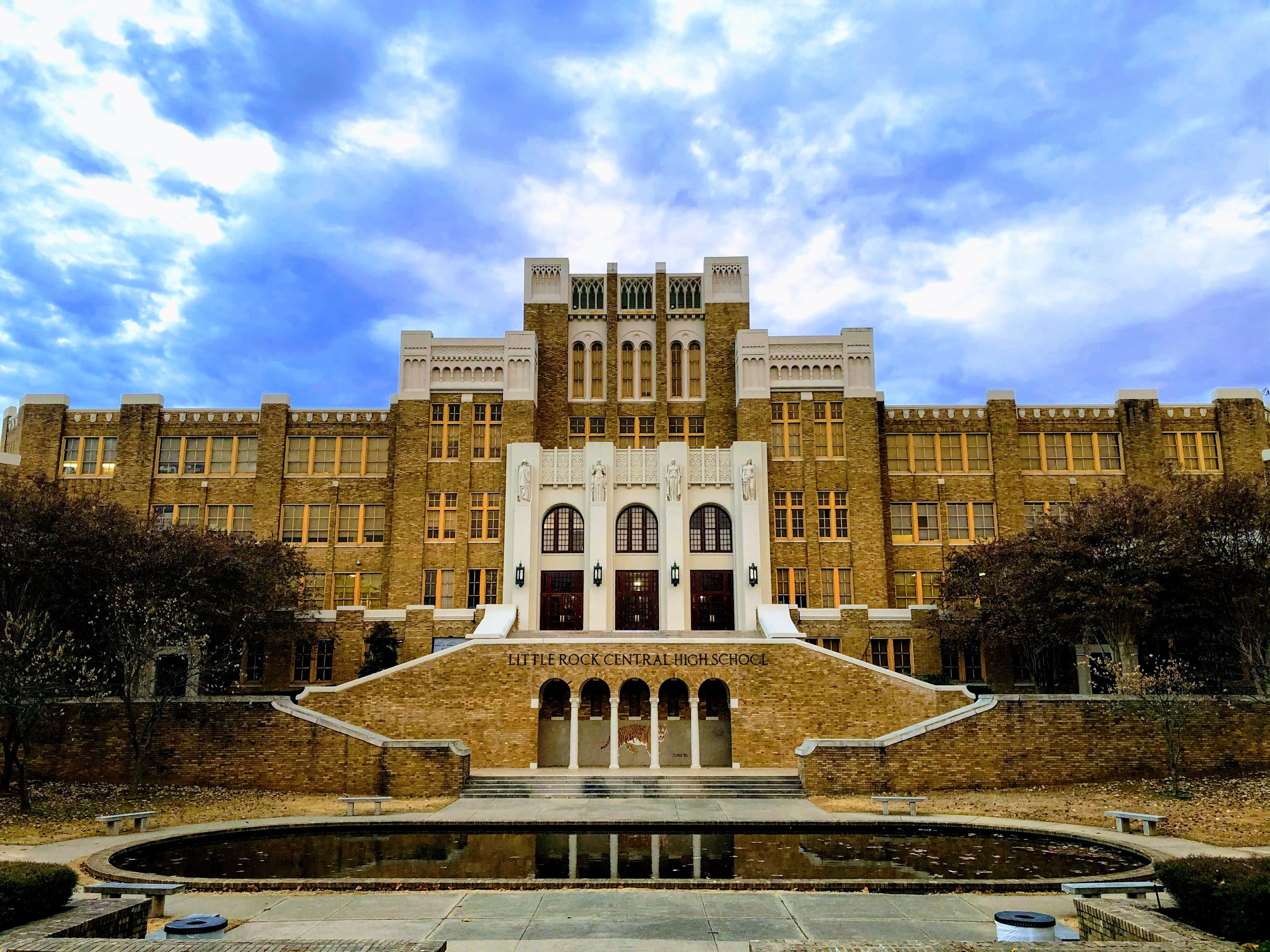
Little Rock Central High School National Historic Site
Little Rock Central High School NHS, 2120 W. Daisy L. Gatson Bates Drive, AR
Type
Park
Lens
Landmarks
Why you'll love it
In 1957, Little Rock Central High School was the epicenter of confrontation and a catalyst for change as the fundamental test for the United States to enforce African American civil rights following Brown v. Board of Education. Learn how the sacrifice and struggle endured by the Little Rock Nine have provided opportunities and opened doors for those seeking education around the world.
Website
National Park Service information
Hours
Little Rock Central High School NHS
- Monday
- Closed
- Tuesday
- 10:00AM - 4:00PM
- Wednesday
- 10:00AM - 4:00PM
- Thursday
- 10:00AM - 4:00PM
- Friday
- 10:00AM - 4:00PM
- Saturday
- 10:00AM - 4:00PM
- Sunday
- Closed
The Little Rock Central High School National Historic Site Visitor Center is currently open Tuesday through Saturday (10 am CST/CDT to 4 pm CST/CDT). The Magnolia Mobil Service Station & Little Rock Central High School are closed to the public and not available for public use. The commemorative garden is open daily for public visitation and use from 7 am CST/CDT until sunset. Guests may visit the NHS daily; we recommend the NPS App for digital content on days when the visitor center is closed.
Directions
From I-630, take Exit 2B (Dr. Martin Luther King Drive). Go south (away from the Arkansas State Capitol) to W. Daisy L. Gatson Bates Drive. Turn right (head west) and continue 0.5 miles. The Visitor Center is on the right at the corner of W. Daisy Bates Drive and Little Rock Nine Way. Parking lot entrance is located just before the intersection with Park Street, directly across from the historic Magnolia/Mobil Gas Station and diagonally across from Central High School (still a functioning high school).
Official directionsWeather & Seasonal Notes
Arkansas weather can change quickly. While the state is in a moderate temperate zone, it does experience strong thunderstorms, tornadoes and flash floods. In winter, "snow" events tend to quickly turn to thin ice which can be difficult to see and to clear. Summer temperatures and humidity can lead to dehydration, heat exhaustion and heat stroke. Visitors are advised to dress in layers and be prepared for precipitation. Average seasonal temperatures (°F): Spring: 62° Summer: 80° Fall: 63° Winter: 43°
Activities
Courtesy of the National Park Service
%22%2F%3E%0A%20%20%3Ctext%20x%3D%22400%22%20y%3D%22300%22%20font-size%3D%22200%22%20text-anchor%3D%22middle%22%20dominant-baseline%3D%22central%22%3E%F0%9F%8F%9B%EF%B8%8F%3C%2Ftext%3E%0A%20%20%3Ctext%20x%3D%22400%22%20y%3D%22470%22%20font-size%3D%2248%22%20font-family%3D%22system-ui%2C%20sans-serif%22%20font-weight%3D%22700%22%20fill%3D%22%23ffffff%22%20fill-opacity%3D%220.92%22%20text-anchor%3D%22middle%22%20dominant-baseline%3D%22central%22%3ELandmark%3C%2Ftext%3E%0A%3C%2Fsvg%3E)
%22%2F%3E%0A%20%20%3Ctext%20x%3D%22400%22%20y%3D%22300%22%20font-size%3D%22200%22%20text-anchor%3D%22middle%22%20dominant-baseline%3D%22central%22%3E%F0%9F%A7%AD%3C%2Ftext%3E%0A%20%20%3Ctext%20x%3D%22400%22%20y%3D%22470%22%20font-size%3D%2244%22%20font-family%3D%22system-ui%2C%20sans-serif%22%20font-weight%3D%22700%22%20fill%3D%22%23ffffff%22%20fill-opacity%3D%220.92%22%20text-anchor%3D%22middle%22%20dominant-baseline%3D%22central%22%3ECollection%3C%2Ftext%3E%0A%3C%2Fsvg%3E)